
Understanding Sore Throat Home Remedies
A sore throat can make everyday activities such as eating, drinking, speaking, and sleeping uncomfortable. In many cases, throat pain develops because of a viral infection and improves on its own within about a week. However, allergies, postnasal drainage, smoking, throat irritation, tonsillitis, and bacterial infections can also cause similar symptoms. Understanding safe sore throat home remedies can help you manage mild discomfort while recognizing when professional ENT care may be necessary.
Home care can be useful when symptoms are mild, but it is important not to assume that every sore throat has the same cause. The CDC notes that most sore throats are caused by viruses and generally do not require antibiotics.
What Causes a Sore Throat?
Before choosing sore throat home remedies, it helps to understand what may be causing the irritation. Viral infections such as colds and flu are common causes. Other possibilities include allergies, exposure to cigarette smoke, dry air, tonsillitis, laryngitis, and bacterial infections such as strep throat.
Symptoms can vary depending on the cause. You may experience a scratchy or dry throat, pain while swallowing, redness, cough, swollen glands, hoarseness, fever, or general throat irritation.
If symptoms are severe, persistent, recurrent, or getting worse, home care alone may not be enough. An ENT specialist can evaluate the throat and determine whether further testing or treatment is appropriate.
10 Sore Throat Home Remedies for Mild Symptoms
For a mild sore throat, simple supportive measures may reduce discomfort and help you stay comfortable while your body recovers. These sore throat home remedies are intended for general supportive care and should not replace medical assessment when concerning symptoms are present.
1. Gargle With Warm Salt Water
Gargling with warm salt water is one of the most commonly recommended sore throat home remedies. It may help soothe throat irritation and keep the throat more comfortable.
The NHS recommends dissolving half a teaspoon of salt in a glass of warm water, gargling with the solution, and spitting it out rather than swallowing it.
Young children should not gargle with salt water because they may swallow the solution.
2. Drink Plenty of Fluids
Staying hydrated is another simple approach. Water and other comfortable fluids can help prevent the throat from becoming excessively dry.
If swallowing is painful, some people find warm drinks or cool drinks more comfortable. The best choice depends on personal comfort.
3. Choose Soft or Comfortable Foods
When swallowing hurts, soft foods may be easier to eat than dry, hard, or spicy foods. Soups, soft meals, and other foods that do not irritate the throat can make eating more comfortable.
The NHS also recommends cool or soft foods for people experiencing a sore throat.
4. Rest Your Voice
Excessive talking, shouting, or prolonged voice use can increase throat discomfort. Giving your voice adequate rest may help reduce additional irritation.
This can be particularly useful for teachers, presenters, singers, customer-service professionals, and others who use their voice extensively.
5. Avoid Smoke and Throat Irritants
Smoking and exposure to secondhand smoke can irritate the throat. Avoiding smoky environments is therefore an important part of supportive care.
Strong fumes, dust, and other environmental irritants may also make throat discomfort worse for some people.
6. Get Adequate Rest
Your body needs adequate rest while recovering from an infection. Maintaining a regular sleep schedule and avoiding unnecessary physical strain can support overall recovery.
Rest alone does not treat every cause of throat pain, but it can be an important part of managing mild symptoms.
7. Try Warm or Cool Fluids
Some people find warm beverages soothing, while others prefer cool liquids. There is no single temperature that works for everyone.
The important point is to choose fluids that feel comfortable and maintain hydration.
8. Use Honey When Appropriate
Honey may be soothing for some people with throat irritation. However, honey should not be given to children younger than one year because of the risk of infant botulism.
Adults and older children should still consider their individual health circumstances and allergies before using any food-based remedy.
9. Avoid Foods That Trigger Irritation
Spicy, acidic, or very hot foods may increase discomfort in some people. If you notice that particular foods make your throat feel worse, temporarily avoiding them may improve comfort.
People who frequently experience throat irritation after meals should also discuss the symptoms with a healthcare professional because reflux can sometimes contribute to throat symptoms.
10. Keep the Environment Comfortable
Dry indoor air may make a scratchy throat feel worse. Keeping your environment comfortably humidified and avoiding smoke or strong irritants may help reduce additional irritation.
These measures can complement other sore throat home remedies, particularly during dry weather or when spending extended periods indoors.
Sore Throat Home Remedies vs Medical Treatment
Home care is mainly intended to provide comfort while a mild condition improves. It does not determine the underlying cause of throat pain.
| Situation | What may be appropriate |
|---|---|
| Mild sore throat | Fluids, rest, comfortable foods and other supportive measures |
| Sore throat with cold symptoms | Supportive care and monitoring |
| Recurrent sore throat | Medical or ENT evaluation |
| Severe throat pain | Professional medical assessment |
| Difficulty breathing or swallowing | Urgent medical attention |
| Suspected bacterial infection | Clinical assessment and testing when appropriate |
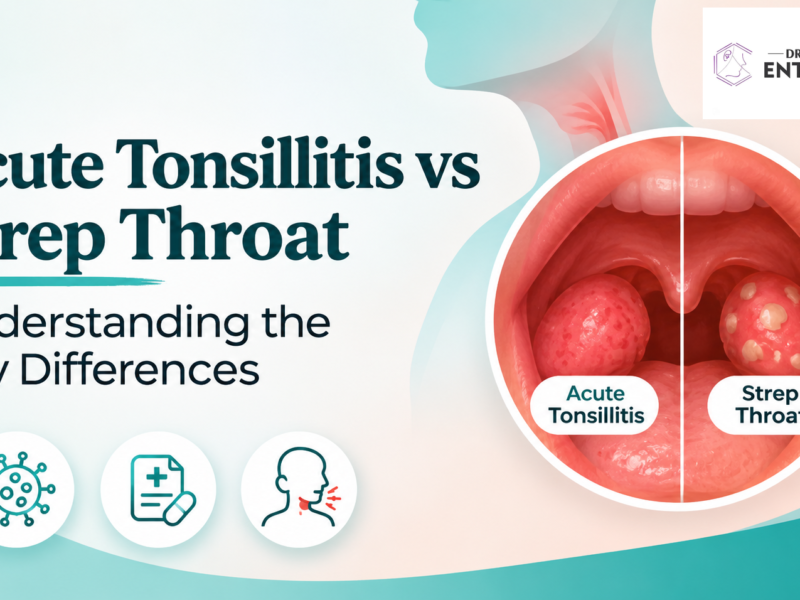
The CDC states that most sore throats are caused by viruses, while strep throat is caused by group A Streptococcus bacteria. Healthcare professionals may use a rapid test or throat culture when appropriate.
Do You Need Sore Throat Treatment or Home Care?
The right sore throat treatment depends on the cause. A viral sore throat often improves with supportive care, while a confirmed bacterial infection may require treatment prescribed by a healthcare professional.
Antibiotics should not be taken simply because your throat hurts. They do not treat viral infections and unnecessary use can cause side effects and contribute to antibiotic resistance.
If your sore throat keeps returning, lasts longer than expected, or is accompanied by other symptoms, an ENT consultation can help identify the underlying problem.
Can Sinus Problems Cause Throat Irritation?
Yes, nasal and sinus problems can sometimes contribute to throat irritation. When mucus drains from the nose toward the back of the throat, it can create an uncomfortable sensation and lead people to search for sinus home remedies.
However, persistent nasal symptoms should not automatically be treated with sinus medicine or sinus infection medicine without understanding the cause. Congestion may be related to a viral illness, allergy, inflammation, or another nasal condition.
If throat irritation repeatedly occurs together with nasal blockage, runny nose, facial pressure, or postnasal drainage, an ENT evaluation may help determine whether a nasal or sinus condition is contributing.
When Should You See an ENT Specialist?
Many mild sore throats improve within a week. However, medical evaluation is recommended when symptoms do not improve, occur frequently, become severe, or interfere significantly with eating and drinking. The NHS advises seeking medical advice when a sore throat does not improve after a week or occurs frequently.
You should seek urgent medical attention if you have difficulty breathing, are unable to swallow, are drooling because you cannot swallow, or have severe symptoms that are worsening quickly.
An ENT specialist can examine the throat, tonsils, nose, ears, and neck and determine whether further investigation is necessary.
Can Vertigo Be Related to ENT Problems?
Sore throat and vertigo are not usually directly connected, but ENT conditions can involve different areas of the ear, nose, and throat. Dizziness and vertigo can have many possible causes, including problems involving the inner ear and balance system.
If you experience repeated spinning sensations, imbalance, or dizziness, a vertigo test may be considered depending on your symptoms and medical history. NIDCD explains that balance disorders can cause dizziness and vertigo and that ENT specialists and audiologists may be involved in evaluating balance problems.
People searching for vertigo medicine should avoid choosing medication solely from online information. Treatment depends on the underlying cause, and some balance disorders may require specific evaluation or treatment rather than simply taking medicine.
When Sore Throat Needs Immediate Attention
Most sore throats are not emergencies, but certain symptoms should not be ignored.
| Warning sign | Recommended action |
|---|---|
| Difficulty breathing | Seek urgent medical care |
| Unable to swallow | Seek urgent medical care |
| Excessive drooling | Seek urgent assessment |
| Severe symptoms getting worse quickly | Seek immediate medical attention |
| Persistent or recurrent sore throat | Arrange a medical or ENT consultation |
| Dehydration symptoms | Seek medical advice |
These warning signs are consistent with guidance from the NHS and CDC.
Why Consult Dr. Monika Bhagat for Throat and ENT Problems?
Dr. Monika Bhagat provides comprehensive ENT care for children and adults in Hadapsar, Pune. The practice covers throat and voice disorders, tonsil and adenoid concerns, sinus and allergy care, hearing and balance evaluation, snoring and sleep apnoea care, and other ENT conditions.
If your throat discomfort is persistent, recurrent, or associated with sinus, ear, voice, swallowing, or balance symptoms, a detailed ENT evaluation can help identify the possible cause.
Instead of continuously trying different sore throat home remedies, patients with ongoing symptoms can benefit from professional evaluation and an individualized treatment plan.
Book an ENT Consultation in Hadapsar, Pune
If you have persistent throat pain, recurring throat irritation, difficulty swallowing, voice changes, or throat symptoms associated with sinus problems, Dr. Monika Bhagat can evaluate your condition and guide you toward appropriate care.
Phone: +91 735 091 2925
Email: drmonikabhagat@gmail.com
Clinic Address: 303B, The Cosmopolis, Opposite SEASONS MALL, Hadapsar, Pune
Whether you are looking for information about sore throat home remedies, sore throat treatment, sinus-related symptoms, or ENT evaluation, professional assessment is important when symptoms persist or become concerning.
Frequently Asked Questions
1. What are the best sore throat home remedies?
Common supportive measures include drinking plenty of fluids, gargling with warm salt water, eating soft or comfortable foods, resting, and avoiding smoking or smoky environments.
2. How long does a sore throat usually last?
Many uncomplicated sore throats improve within about a week. If symptoms persist beyond this period, frequently return, or become worse, medical evaluation may be appropriate.
3. Should I take antibiotics for a sore throat?
Not necessarily. Most sore throats are caused by viruses, against which antibiotics do not work. Antibiotics may be prescribed when a bacterial infection such as strep throat is identified or considered clinically appropriate.
4. Can sinus problems cause throat irritation?
Yes. Nasal drainage can irritate the back of the throat. If throat symptoms repeatedly occur with nasal congestion or drainage, an ENT specialist can evaluate the possible cause.
5. When should I stop using home remedies and see an ENT?
Consider an ENT consultation if your sore throat does not improve within about a week, keeps returning, becomes severe, or is associated with swallowing, breathing, voice, or other concerning problems.
6. Can an ENT doctor evaluate vertigo too?
Yes. ENT specialists can be involved in evaluating balance disorders and vertigo, particularly when an inner-ear cause is suspected. Additional testing may be recommended depending on the symptoms.