Acute Tonsillitis vs Strep Throat: Understanding the Key Differences
A sore throat can make everyday activities such as eating, drinking, speaking, and swallowing uncomfortable. Sometimes, the discomfort is caused by inflammation of the tonsils, while in other cases, it may be associated with a bacterial infection such as strep throat. Although these conditions can produce similar symptoms, understanding the difference is important for choosing appropriate medical care.
When researching acute tonsillitis vs strep throat, many people wonder whether both conditions are the same, how to recognise their symptoms, and whether antibiotics are necessary. Acute tonsillitis describes sudden inflammation of the tonsils, whereas strep throat is an infection caused by Group A Streptococcus bacteria that can also affect the tonsils.
If you are experiencing persistent throat pain, fever, swollen tonsils, or difficulty swallowing, an ENT evaluation can help identify the possible cause. Dr. Monika Bhagat’s ENT Clinic in Hadapsar, Pune, provides consultations for throat infections, tonsil conditions, and related ENT concerns in children and adults.
What Is Acute Tonsillitis?
Acute tonsillitis is the sudden inflammation of the tonsils, which are two small tissue structures located at the back of the throat. These structures form part of the immune system and help the body respond to infections entering through the mouth and nose.
The condition commonly develops due to viral infections, although bacteria can also cause it. Symptoms may include a sore throat, swollen tonsils, fever, painful swallowing, and sometimes white patches on the tonsils.
Understanding acute tonsillitis vs strep throat begins with recognising that tonsillitis describes inflammation, not a specific type of microorganism. A viral infection, bacterial infection, or other condition may be responsible for the inflammation.
Most uncomplicated cases improve with appropriate supportive care. However, severe symptoms, recurring infections, or suspected bacterial infections require medical assessment.
What Is Strep Throat?
Strep throat is a bacterial infection caused by Group A Streptococcus, also known as Streptococcus pyogenes. It commonly affects the throat and may cause inflammation of the tonsils.
Unlike viral throat infections, confirmed strep throat may require antibiotic treatment prescribed by a healthcare professional. Treatment helps manage the infection, reduces transmission, and lowers the risk of certain complications.
When comparing acute tonsillitis vs strep throat, it is important to remember that strep throat can cause acute tonsillitis, but not every case of acute tonsillitis is caused by streptococcal bacteria.
Strep throat is particularly common among school-aged children, although adults can also develop the infection. Close contact with an infected person, respiratory droplets, and shared indoor environments can increase the possibility of transmission.
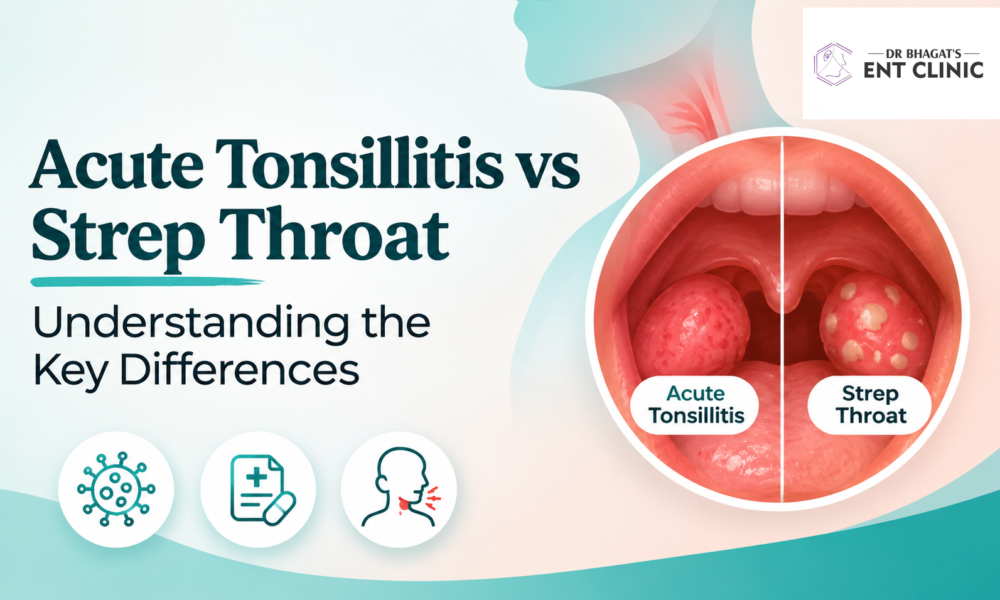
Acute Tonsillitis vs Strep Throat: Key Differences
The two conditions share several symptoms, which can make them difficult to distinguish without medical evaluation. However, their causes, diagnostic approaches, and treatment requirements can differ.
The following comparison explains the important differences.
| Comparison | Acute Tonsillitis | Strep Throat |
|---|---|---|
| Meaning | Sudden inflammation of the tonsils | Bacterial throat infection |
| Main cause | Viruses or bacteria | Group A Streptococcus |
| Sore throat | Common | Common, often sudden |
| Fever | May occur | Common |
| White patches | May be present | May be present |
| Cough | Possible | Usually absent |
| Runny nose | Possible, especially with viral infection | Usually absent |
| Antibiotics | Only when a bacterial cause requires them | Usually prescribed for confirmed cases |
This comparison provides general guidance rather than a diagnosis. Symptoms can overlap, and an examination or laboratory test may be necessary.
When evaluating acute tonsillitis vs strep throat, doctors consider the complete symptom pattern rather than relying on a single sign, such as white spots or fever.
Common Symptoms of Both Conditions
Both conditions can cause considerable throat discomfort. The severity of symptoms may vary depending on the infection, age, and individual health.
Common symptoms include:
-
Sore throat and pain while swallowing.
-
Redness and swelling of the tonsils.
-
Fever and chills.
-
Tender or swollen lymph nodes in the neck.
-
Headache and tiredness.
-
White patches or spots on the tonsils.
-
Reduced appetite and difficulty eating.
However, certain symptoms may provide additional clues. Cough, sneezing, runny nose, and hoarseness are more suggestive of a viral respiratory infection than classic strep throat.
In contrast, sudden throat pain, fever, painful swallowing, and tender neck glands without cough may raise suspicion of strep throat.
The differences in acute tonsillitis vs strep throat are not always obvious, especially in children. A healthcare professional should assess symptoms before recommending treatment.
How Is Acute Tonsillitis Different from Strep Throat in Children?
Children can develop both conditions, particularly when they attend school or spend time in close-contact environments. Parents may notice fever, throat pain, reduced appetite, difficulty swallowing, or swollen tonsils.
In children, strep throat may also cause headache, stomach pain, nausea, or vomiting. Younger children may not always describe their symptoms clearly, so changes in eating, drinking, and behaviour can be important.
Understanding acute tonsillitis vs strep throat is particularly important for children because untreated Group A Streptococcus infections can sometimes lead to complications.
Parents should arrange medical evaluation if a child experiences:
-
Persistent or severe throat pain.
-
Fever accompanied by swollen tonsils.
-
Difficulty swallowing food or liquids.
-
Repeated throat infections.
-
Tender lymph nodes in the neck.
-
Sudden changes in appetite or activity.
Children with breathing difficulty, drooling because they cannot swallow, or signs of severe dehydration require urgent medical attention.
How Do Doctors Diagnose These Conditions?
Since the symptoms of both conditions overlap, a physical examination alone may not always identify the exact cause. A doctor reviews the patient’s symptoms, medical history, and throat examination findings before deciding whether testing is necessary.
When assessing acute tonsillitis vs strep throat, the following diagnostic approaches may be considered.
1. Physical Examination
The doctor examines the tonsils and surrounding throat tissues for redness, swelling, white patches, and other signs of inflammation. The neck may also be examined for enlarged or tender lymph nodes.
2. Rapid Antigen Detection Test
A rapid strep test uses a throat swab to detect Group A Streptococcus antigens. It can provide results quickly and help guide treatment decisions.
3. Throat Culture
A throat culture involves collecting a sample from the throat and testing it for bacterial growth. It can help confirm a streptococcal infection.
In symptomatic children aged three years and older, a negative rapid antigen test is generally followed by a throat culture. Routine backup culture is not usually necessary for adults following a negative rapid test.
4. Clinical Assessment
The doctor considers the test results alongside symptoms and examination findings. This helps distinguish possible viral infections from bacterial conditions and determine the appropriate treatment.
A proper diagnosis is important because acute tonsillitis vs strep throat can require different management approaches.
CTA: Book an ENT Consultation in Pune
Experiencing recurring throat infections or painful swallowing?
Get your throat and tonsil concerns evaluated by Dr. Monika Bhagat. Contact the clinic to discuss your symptoms and enquire about an appointment.
+91-735-091-2925
drmonikabhagat@gmail.com
303B, The Cosmopolis, Opposite Seasons Mall, Hadapsar, Pune.
Website: Dr. Monika Bhagat ENT Clinic
Treatment Options: What Is the Right Approach?
Treatment depends on the underlying cause rather than simply the appearance of the tonsils. Viral infections generally improve with supportive care, whereas confirmed bacterial infections may require antibiotics.
Treatment for Acute Tonsillitis
When acute tonsillitis is caused by a virus, treatment generally focuses on relieving discomfort and supporting recovery.
A doctor may recommend suitable pain-relieving medication, adequate fluids, rest, and other supportive measures according to the patient’s age and medical history.
Warm saltwater gargles may also help soothe throat discomfort when appropriate. Patients should avoid smoking and other throat irritants during recovery.
Treatment for Strep Throat
Confirmed strep throat is generally treated with prescribed antibiotics. Penicillin or amoxicillin are commonly recommended first-line options when appropriate.
The choice of antibiotic depends on factors such as allergies, age, medical history, and clinical assessment. Patients should follow the prescribed dosage and duration rather than stopping medication when symptoms improve.
Antibiotics should not be taken unnecessarily because they do not treat viral infections and can cause side effects.
Can Both Conditions Require Surgery?
Most patients do not require surgery for a single episode of tonsillitis or strep throat. However, tonsillectomy may be considered in selected patients who experience frequent, documented infections or significant complications.
An ENT specialist evaluates the frequency of episodes, their effect on everyday life, and other clinical factors before discussing surgical options.
When considering acute tonsillitis vs strep throat, remember that surgery is not a routine treatment for an uncomplicated infection. It is considered only when specific medical indications are present.
When Should You Consult an ENT Specialist in Pune?
Occasional throat irritation may improve with supportive care. However, persistent pain, recurring infections, fever, or difficulty swallowing should not be ignored.
Consider consulting an ENT specialist if you experience repeated tonsil infections, severe throat pain, persistent swollen tonsils, or symptoms that do not improve as expected.
Patients searching for acute tonsillitis vs strep throat information should avoid self-diagnosing based on photographs or online symptom checkers. White patches do not automatically indicate strep throat, and antibiotics should never be started without appropriate medical advice.
Dr. Monika Bhagat’s ENT Clinic in Hadapsar, Pune, provides consultations for tonsil and adenoid conditions, throat infections, and related ENT concerns. The clinic offers evaluation for children and adults, with treatment recommendations based on individual symptoms and clinical findings.
Why Choose an ENT Specialist for Tonsil Problems?
An ENT specialist can evaluate recurring throat infections, enlarged tonsils, swallowing difficulties, and other conditions affecting the throat.
Understanding acute tonsillitis vs strep throat is an important part of deciding whether additional investigations or treatment are required. A specialist can review your symptoms, examine the tonsils, and recommend testing when a bacterial infection is suspected.
Dr. Monika Bhagat provides ENT consultations for children and adults, including tonsil and adenoid evaluation, medical management, and surgical treatment when clinically appropriate.
Patients can also discuss recurring infections, enlarged tonsils, and related sleep or breathing concerns during their consultation.
CTA: Consult Dr. Monika Bhagat for Tonsil and Throat Care
Looking for professional tonsil care in Hadapsar, Pune?
Consult Dr. Monika Bhagat for an evaluation of recurring tonsillitis, suspected throat infections, enlarged tonsils, and related ENT concerns.
Doctor: Dr. Monika Bhagat
Phone: +91-735-091-2925
Email: drmonikabhagat@gmail.com
Address: 303B, The Cosmopolis, Opposite Seasons Mall, Hadapsar, Pune.
Contact the clinic to confirm appointment availability.
Frequently Asked Questions
1. Is acute tonsillitis the same as strep throat?
No. Acute tonsillitis describes inflammation of the tonsils caused by viral or bacterial infections. Strep throat is specifically caused by Group A Streptococcus bacteria and may also cause tonsillitis.
2. How can I identify strep throat?
Common signs include sudden throat pain, fever, painful swallowing, swollen tonsils, and tender neck glands. A rapid antigen test or throat culture may be required to confirm the infection.
3. Does acute tonsillitis always require antibiotics?
No. Viral tonsillitis does not require antibiotics. Antibiotics may be prescribed when a bacterial infection, such as strep throat, is appropriately diagnosed.
4. Can strep throat cause white spots on the tonsils?
Yes. Strep throat can cause white patches or pus on the tonsils. However, white spots can also occur with other infections, so they cannot confirm strep throat on their own.
5. When should I visit an ENT specialist in Pune?
Consider an ENT consultation if you experience recurring tonsil infections, persistent throat pain, enlarged tonsils, or difficulty swallowing. Breathing difficulty or inability to swallow saliva requires urgent medical attention.
6. Can tonsillitis and strep throat occur together?
Yes. Strep throat can cause acute inflammation of the tonsils. This means a patient can have both conditions at the same time, although not every case of tonsillitis is caused by strep bacteria.