
Introduction
Tonsils and adenoids are important parts of the body’s immune system, especially during childhood. They help protect the body by trapping germs and preventing infections. However, when tonsils or adenoids become enlarged or infected repeatedly, they can cause discomfort, breathing problems, and difficulty swallowing.
According to Dr. Monika Bhagat, early diagnosis and proper treatment of tonsil and adenoid problems can help prevent complications and improve overall health and quality of life.
What Are Tonsils and Adenoids?
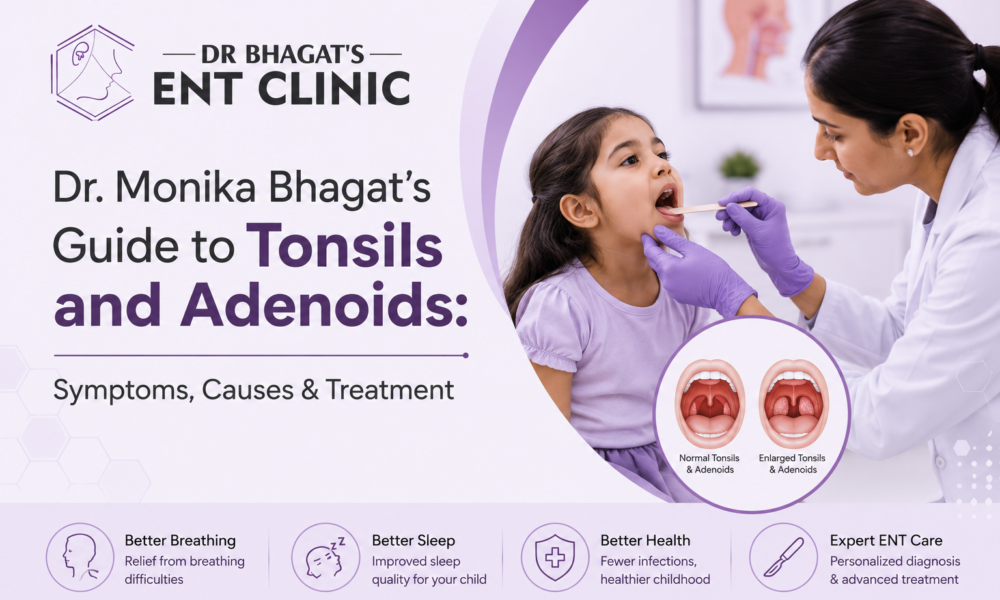
Tonsils are two soft tissue masses located at the back of the throat, while adenoids are situated behind the nose and above the roof of the mouth. Both play a role in fighting infections by trapping bacteria and viruses entering through the mouth and nose.
As children grow older, the role of tonsils and adenoids becomes less important because the immune system develops other ways to fight infections.
Common Causes of Tonsil and Adenoid Problems
Tonsils and adenoids can become enlarged or infected due to repeated bacterial or viral infections. Allergies, sinus infections, exposure to pollution, and weak immunity may also contribute to inflammation.
In some children, enlarged adenoids may block the airway and affect breathing or sleep quality.
Symptoms of Enlarged Tonsils and Adenoids
Patients with tonsil or adenoid problems may experience sore throat, pain while swallowing, bad breath, fever, swollen glands in the neck, snoring, mouth breathing, nasal blockage, and disturbed sleep.
Children with enlarged adenoids often breathe through the mouth, snore loudly, or experience frequent ear and sinus infections. In severe cases, sleep apnoea may develop due to airway obstruction.
Dr. Monika Bhagat explains that persistent symptoms should never be ignored, especially if they interfere with eating, sleeping, or breathing.
When Should You See an ENT Specialist?
You should consult an ENT specialist if tonsil infections occur repeatedly, symptoms do not improve with medications, breathing becomes difficult, or the child experiences loud snoring and disturbed sleep.
Frequent throat infections, swallowing difficulties, and recurring fever may also indicate the need for medical evaluation.
How Are Tonsil and Adenoid Problems Diagnosed?
Diagnosis usually begins with a detailed examination of the throat, nose, and ears. An ENT specialist may also ask about sleep patterns, breathing issues, and frequency of infections.
In some cases, nasal endoscopy, throat examination, hearing evaluation, or sleep studies may be recommended to assess the severity of the condition.
Treatment Options for Tonsils and Adenoids
Treatment depends on the severity and frequency of symptoms. Mild infections may improve with medications, hydration, rest, and proper hygiene.
If infections become frequent or enlarged tonsils and adenoids affect breathing and sleep, surgical removal may be recommended. Tonsillectomy and adenoidectomy are commonly performed procedures that help improve breathing, sleep quality, swallowing, and overall comfort.
Dr. Monika Bhagat ensures personalized treatment plans based on the patient’s age, symptoms, and overall health condition.
Can Adults Have Tonsil Problems?
Although tonsil and adenoid issues are more common in children, adults can also experience chronic tonsillitis, throat infections, bad breath, and sleep-related breathing problems caused by enlarged tonsils.
Adults with repeated throat infections or persistent discomfort should also seek ENT consultation.
Recovery After Tonsil or Adenoid Surgery
Most patients recover within one to two weeks after surgery. Proper hydration, soft foods, rest, and following medical advice can help ensure smooth recovery.
Many patients experience significant improvement in breathing, sleep, and overall quality of life after treatment.
Conclusion
Tonsil and adenoid problems can affect breathing, sleep, swallowing, and overall health if left untreated. Early diagnosis and timely treatment are essential to prevent complications and ensure long-term relief.
Dr. Monika Bhagat provides expert care for tonsillitis, enlarged adenoids, snoring, sleep apnoea, and various ENT-related conditions. Proper medical evaluation and treatment can help patients lead a healthier and more comfortable life.
Frequently Asked Questions (FAQs)
What causes enlarged tonsils and adenoids?
Repeated infections, allergies, and inflammation are common causes of enlarged tonsils and adenoids.
Can enlarged adenoids affect breathing?
Yes, enlarged adenoids can block the airway and lead to mouth breathing, snoring, and sleep disturbances.
When is tonsil surgery necessary?
Surgery may be recommended if infections occur frequently, breathing becomes difficult, or sleep quality is severely affected.
Are tonsil and adenoid surgeries safe?
Yes, these procedures are commonly performed and are generally considered safe when done by an experienced ENT specialist.
Can adults suffer from tonsil problems?
Yes, adults may experience chronic tonsillitis, throat infections, and breathing problems related to enlarged tonsils.
When should I consult Dr. Monika Bhagat for tonsil or adenoid problems?
You should seek medical advice if symptoms are frequent, severe, affect breathing or sleep, or do not improve with medications.