Introduction
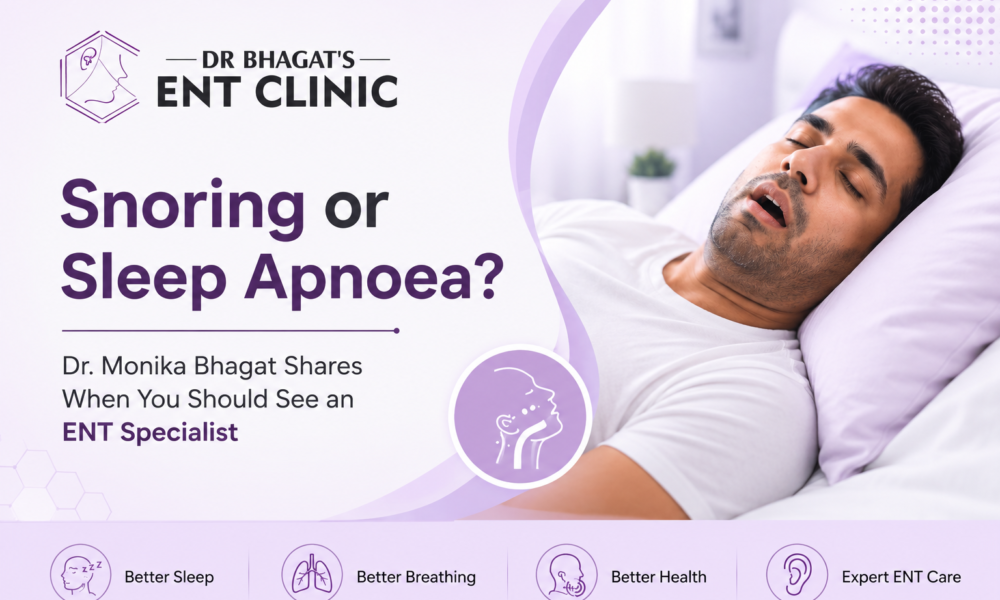
Snoring is often ignored as a common sleeping habit, but in many cases, it may indicate a more serious health condition known as sleep apnoea. While occasional snoring can happen due to tiredness, allergies, or nasal congestion, loud and persistent snoring should never be overlooked. It can affect sleep quality, overall health, and daily life.
According to Dr. Monika Bhagat, understanding the difference between regular snoring and sleep apnoea is important for early diagnosis and effective treatment.
What Causes Snoring?
Snoring occurs when airflow is partially blocked during sleep, causing the tissues in the throat and nose to vibrate. Many factors can contribute to snoring, including nasal blockage, sinus infections, obesity, enlarged tonsils, allergies, alcohol consumption, or sleeping posture.
Although occasional snoring is common, chronic snoring may point toward an underlying airway problem that requires medical attention.
What Is Sleep Apnoea?
Sleep apnoea is a sleep disorder in which breathing repeatedly stops and starts during sleep. The most common type, known as obstructive sleep apnoea, happens when the throat muscles relax excessively and block the airway.
Many people suffering from sleep apnoea are unaware of the condition because the breathing interruptions happen during sleep. Family members are often the first to notice symptoms such as loud snoring or pauses in breathing.
Symptoms You Should Not Ignore
People with sleep apnoea often experience loud snoring, choking or gasping during sleep, daytime tiredness, morning headaches, poor concentration, irritability, dry mouth, and restless sleep.
In some cases, untreated sleep apnoea can increase the risk of high blood pressure, heart disease, diabetes, and severe fatigue.
When Should You Visit an ENT Specialist?
Dr. Monika Bhagat advises consulting an ENT specialist if snoring occurs regularly, if breathing pauses are noticed during sleep, or if a person feels exhausted even after sleeping for several hours.
Children who snore loudly or breathe through the mouth while sleeping may also require medical evaluation, as enlarged tonsils and adenoids can contribute to sleep-related breathing disorders.
How Is Sleep Apnoea Diagnosed?
An ENT specialist carefully evaluates the airway, nose, throat, and sleeping symptoms to identify the root cause of the problem. Diagnosis may involve a detailed clinical examination, nasal endoscopy, and in some cases, a sleep study to understand the severity of sleep apnoea.
Early diagnosis can help prevent complications and improve quality of life.
Treatment Options for Snoring and Sleep Apnoea
Treatment depends on the severity and underlying cause of the condition. Mild cases may improve with lifestyle modifications such as weight management, regular exercise, avoiding alcohol before bedtime, and changing sleeping posture.
Medical treatments may include allergy management, nasal treatments, or CPAP therapy for moderate to severe sleep apnoea. In cases where enlarged tonsils, nasal blockage, or structural abnormalities are causing airway obstruction, surgical treatment may be recommended.
Sleep Apnoea in Children
Children with sleep apnoea may show symptoms such as loud snoring, restless sleep, hyperactivity, difficulty concentrating, or poor academic performance. Early diagnosis and treatment can significantly improve sleep quality, breathing, and overall development.
Conclusion
Snoring is not always harmless. Persistent snoring and disturbed sleep can affect physical health, mental well-being, and quality of life. Early consultation with an ENT specialist can help identify whether the condition is simple snoring or a sign of sleep apnoea.
Dr. Monika Bhagat provides expert care for snoring, sleep apnoea, sinus disorders, tonsil problems, and other ENT-related conditions. Timely diagnosis and proper treatment can help patients achieve better sleep, improved breathing, and a healthier life.
Frequently Asked Questions (FAQs)
Is snoring always a sign of sleep apnoea?
No, occasional snoring may happen due to tiredness, allergies, or nasal congestion. However, loud and frequent snoring combined with daytime tiredness or breathing pauses during sleep may indicate sleep apnoea.
Can sleep apnoea be dangerous?
Yes, untreated sleep apnoea can increase the risk of high blood pressure, heart disease, diabetes, fatigue, and poor concentration.
Which doctor should I consult for snoring problems?
An ENT specialist can evaluate the nose, throat, and airway to identify the cause of snoring and recommend the right treatment.
Can children suffer from sleep apnoea?
Yes, children with enlarged tonsils or adenoids can develop sleep apnoea. Symptoms may include loud snoring, mouth breathing, and restless sleep.
What treatments are available for sleep apnoea?
Treatment options may include lifestyle changes, CPAP therapy, allergy management, nasal treatments, or surgery depending on the severity and cause of the condition.
When should I see Dr. Monika Bhagat for snoring?
You should consult an ENT specialist if snoring is frequent, very loud, associated with breathing pauses, or causing daytime tiredness and disturbed sleep.