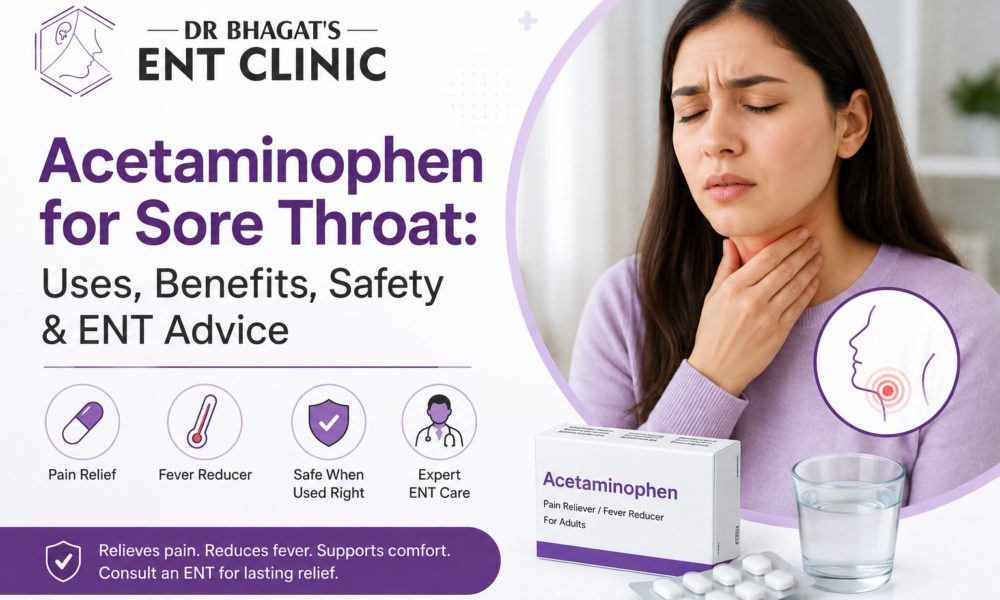
A sore throat can make everyday activities such as swallowing, eating, drinking, speaking, and sleeping uncomfortable. When throat pain develops, many adults search for acetaminophen for sore throat because they want safe and effective relief from discomfort.
Acetaminophen, also known as paracetamol in many countries, is commonly used to reduce pain and fever. However, it is important to understand that pain relief medicine does not necessarily treat the underlying cause of a sore throat. A sore throat may result from a viral infection, bacterial infection, allergies, irritation, acid reflux, tonsil problems, or other conditions.
Knowing when acetaminophen for sore throat may help, how it differs from antibiotics, and when an ENT consultation is appropriate can help patients make more informed decisions about throat care.
Dr. Monika Bhagat provides ENT consultation and specialized care for throat disorders, including throat infections and voice-related conditions, at her clinic in Hadapsar, Pune. The clinic also provides comprehensive ear, nose, throat, sinus, hearing, and balance care.
What Is Acetaminophen?
Acetaminophen is a medicine commonly used to relieve mild to moderate pain and reduce fever. In India, it is more commonly known as paracetamol.
When someone has a sore throat accompanied by pain or fever, acetaminophen for sore throat may provide temporary symptom relief when used appropriately. It can make swallowing and daily activities more comfortable while the underlying condition improves.
However, acetaminophen does not directly eliminate viruses or bacteria. This distinction is important because patients sometimes assume that taking a pain-relief medicine will treat the infection itself.
The appropriate use of acetaminophen for sore throat therefore depends on the symptoms, age, health condition, other medicines being taken, and the underlying reason for the throat pain.
Can Acetaminophen Help With a Sore Throat?
Yes, acetaminophen for sore throat can help reduce throat pain and fever in many situations. It works as a pain reliever and fever reducer, which can make symptoms easier to manage.
For example, someone with a viral upper respiratory infection may experience throat pain, fever, tiredness, cough, and congestion. In such cases, appropriate pain and fever management may help the person remain comfortable while the body recovers.
However, acetaminophen for sore throat is a symptom-relief option rather than a universal treatment for every throat condition.
If the sore throat is caused by a bacterial infection, a doctor may determine that additional treatment is necessary. If the cause is allergies, acid reflux, tonsil disease, or another condition, the treatment approach may be different.
Common Causes of Sore Throat
A sore throat can have many causes, and identifying the underlying cause is more important than simply treating the pain.
Viral infections are one of the most common causes. Colds and other respiratory infections may produce throat irritation together with coughing, nasal congestion, sneezing, or fever.
Bacterial infections can also cause significant throat pain. Some bacterial throat infections may require antibiotics after appropriate medical evaluation.
Other possible causes include allergies, postnasal drainage, dry air, smoking or exposure to irritants, acid reflux, voice overuse, tonsil inflammation, and other ENT conditions.
This is why acetaminophen for sore throat should be considered primarily for symptom relief while the underlying condition is assessed when necessary.
Common Causes and Treatment Considerations
| Possible Cause | Common Symptoms | General Treatment Approach |
| Viral infection | Sore throat, cough, congestion, fever | Rest, fluids and symptom management |
| Bacterial infection | Throat pain, fever, swollen tonsils | Medical evaluation and treatment if indicated |
| Allergies | Throat irritation, sneezing, nasal symptoms | Allergy-focused management |
| Acid reflux | Throat irritation, burning, hoarseness | Evaluation and reflux management |
| Tonsil problems | Painful swallowing, swollen tonsils | ENT assessment |
| Environmental irritation | Dry or irritated throat | Avoidance of triggers and supportive care |
These symptoms can overlap, so a healthcare professional may need to evaluate persistent or severe throat problems.
How Does Acetaminophen Relieve Throat Pain?
When considering acetaminophen for sore throat, it is helpful to understand that the medicine works by reducing pain signals and lowering an elevated body temperature.
It does not numb the throat in the same way as certain local preparations, and it does not eliminate the bacteria or virus responsible for an infection.
The main benefit is improved comfort. Reduced pain may make it easier to drink fluids, eat soft foods, rest, and continue normal activities while recovering.
Patients should always follow the dosage instructions on the specific product or the instructions provided by a qualified healthcare professional. The appropriate amount can vary depending on age, formulation, and individual circumstances.
Acetaminophen vs Antibiotics for Sore Throat
One of the most common misunderstandings about sore throat treatment is assuming that every throat infection requires an antibiotic.
Acetaminophen for sore throat and antibiotics serve completely different purposes. Acetaminophen is primarily used for pain and fever relief, while antibiotics are medicines used to treat certain bacterial infections.
Taking an antibiotic does not automatically provide better pain relief, and taking acetaminophen does not treat a bacterial infection.
Patients searching for phrases such as best antibiotic for sore throat infection, antibiotic for throat pain, or antibiotics for throat pain should not start medication without professional advice.
Acetaminophen and Antibiotics: Key Differences
| Aspect | Acetaminophen | Antibiotics |
| Main purpose | Pain and fever relief | Treatment of certain bacterial infections |
| Treats viral infections | No | No |
| Relieves pain | Yes | Not primarily a pain-relief medicine |
| Requires diagnosis of bacterial infection | No for general pain relief, but safe use still matters | Yes, when clinically indicated |
| Main concern | Incorrect dose or excessive use | Unnecessary use and antibiotic resistance |
Understanding this difference can prevent unnecessary antibiotic use and encourage appropriate treatment.
Is Acetaminophen Safe for Adults?
For many adults, acetaminophen for sore throat can be used safely when taken according to the recommended instructions. However, more is not better, and taking more than the recommended amount can cause serious harm.
Acetaminophen is present in many combination medicines, including some products used for cold and flu symptoms. Taking multiple medicines containing acetaminophen at the same time can unintentionally result in excessive intake.
People with liver disease, heavy alcohol use, or other medical concerns should discuss appropriate use with a healthcare professional.
If you are unsure whether acetaminophen for sore throat is suitable for you, consult a doctor or pharmacist before taking it.
What About Acetaminophen for Children?
Children require particular attention when using pain-relief medicines. Dosage is generally based on factors such as age, weight, and the specific product formulation.
Parents should not give children an adult formulation or estimate a dose without appropriate guidance. Always check the product instructions and consult a healthcare professional when uncertain.
If a child has a persistent sore throat, difficulty swallowing, repeated tonsil infections, breathing difficulties, dehydration, or other concerning symptoms, an ENT or pediatric evaluation may be appropriate.
Natural Remedies for Throat Ulcers and Irritation
Some people search for natural remedies for throat ulcers when throat discomfort is accompanied by small painful lesions or irritation.
Depending on the cause, staying hydrated, avoiding very spicy or acidic foods, and choosing soft foods may help reduce irritation. Maintaining good oral hygiene can also be helpful.
However, persistent ulcers should not simply be assumed to be minor irritation. Recurrent, unusually large, painful, or slow-healing ulcers should be evaluated by a healthcare professional.
While acetaminophen for sore throat may help reduce associated pain, it does not treat the underlying cause of throat ulcers.
When Should You See an ENT Specialist?
A mild sore throat often improves with time and supportive care. However, persistent or recurrent symptoms may indicate a condition requiring professional evaluation.
You should consider an ENT consultation if throat pain continues, repeatedly returns, significantly affects eating or drinking, or is accompanied by persistent voice changes, tonsil problems, swallowing difficulties, or other ENT symptoms.
An ENT specialist can examine the throat and related structures to determine whether the symptoms are associated with infection, inflammation, tonsils, reflux, allergies, or another condition.
Dr. Monika Bhagat’s clinic provides advanced head and neck care, including evaluation and treatment of throat infections and voice disorders.
For patients using acetaminophen for sore throat repeatedly because the pain keeps returning, identifying the underlying reason for the symptoms is particularly important.
When Is Sore Throat an Emergency?
Certain symptoms require urgent medical attention rather than routine self-care.
Difficulty breathing, inability to swallow, severe swelling, excessive drooling because swallowing is difficult, significant dehydration, or rapidly worsening symptoms can require urgent evaluation.
Severe throat pain that is associated with difficulty opening the mouth, major neck swelling, or significant breathing problems should also not be managed only with acetaminophen for sore throat.
If you are concerned about the severity of your symptoms, seek appropriate medical attention promptly.
Can Acetaminophen Treat a Throat Infection?
No. Acetaminophen for sore throat can help manage pain and fever, but it does not directly treat the infection causing the symptoms.
If the throat problem is caused by a virus, supportive care may be sufficient in many cases. If a bacterial infection is suspected or confirmed, a healthcare professional may recommend appropriate treatment.
This is why it is important not to assume that a throat pain tablet for adults will cure the underlying condition.
Similarly, antibiotics should not be taken simply because throat pain is severe. Antibiotic treatment should be based on an appropriate medical assessment.
How Can You Reduce Throat Discomfort?
Along with appropriate pain management, simple measures may help make throat symptoms more comfortable.
Drinking sufficient fluids can help prevent dehydration. Warm or cool beverages may be soothing depending on personal preference. Soft foods can be easier to swallow when the throat is painful.
Avoiding cigarette smoke and other throat irritants may also help. Adequate rest can support recovery when a sore throat is associated with a viral illness.
These measures can complement acetaminophen for sore throat when pain and fever are present, but they should not delay professional care when symptoms are severe or persistent.
Why Choose Dr. Monika Bhagat for ENT Care?
Dr. Monika Bhagat is an ENT specialist in Hadapsar, Pune, providing comprehensive care for ear, nose, throat, sinus, hearing, balance, and related conditions.
The clinic focuses on advanced ENT diagnosis, personalized treatment planning, and medical as well as minimally invasive surgical care. Its services include sinus and allergy care, hearing and balance evaluation, tonsil and adenoid treatment, snoring and sleep apnoea care, and voice and throat disorder management. (drmonikabhagatent.com –)
Patients who repeatedly rely on acetaminophen for sore throat can benefit from an evaluation when symptoms do not resolve or continue to return.
Instead of treating recurring pain without identifying the cause, an ENT consultation can help determine whether the problem is related to infection, tonsils, reflux, allergies, voice use, or another throat condition.
Conclusion
Acetaminophen for sore throat can be useful for temporary relief from throat pain and fever, but it does not treat every underlying cause of a sore throat. Understanding whether the symptoms are caused by a viral infection, bacterial infection, allergies, reflux, tonsil problems, or irritation is essential for choosing the right treatment.
Adults should follow the recommended instructions when using acetaminophen and avoid taking multiple medicines containing the same active ingredient.
If throat pain is severe, persistent, recurrent, or associated with swallowing or breathing difficulties, an ENT evaluation is recommended rather than relying only on acetaminophen for sore throat.
Professional evaluation can help identify the underlying cause and ensure that treatment is appropriate for the individual patient.
Book an ENT Consultation in Pune
If you are experiencing persistent throat pain and are considering acetaminophen for sore throat, consult an ENT specialist to understand the possible cause of your symptoms.
Need ENT Consultation? Call Us:
+91 735 091 2925
Email:
drmonikabhagat@gmail.com
Instagram
Our Address:
303B, The Cosmopolis, Opposite of SEASONS MALL, Hadapsar, Pune
Dr. Monika Bhagat provides comprehensive ENT consultation and personalized treatment for throat and other ear, nose, and throat conditions.
Frequently Asked Questions
1. Can acetaminophen help with sore throat pain?
Yes, acetaminophen for sore throat can help reduce pain and fever. However, it does not treat the underlying cause of the sore throat.
2. Does acetaminophen cure a throat infection?
No. Acetaminophen for sore throat is primarily used for symptom relief. It does not kill bacteria or viruses responsible for infections.
3. Can I take acetaminophen with an antibiotic?
In some circumstances, acetaminophen and an antibiotic may be used together, but the medicines and individual circumstances matter. If you have been prescribed an antibiotic, follow your healthcare professional’s instructions and check with them or a pharmacist if you are unsure about combining medicines.
4. What is the best throat pain tablet for adults?
The appropriate throat pain tablet for adults depends on the cause of the pain and the individual’s health condition. Acetaminophen may help with pain and fever when used appropriately, but persistent throat pain should be evaluated.
5. Are natural remedies useful for throat ulcers?
Some supportive measures may reduce irritation, but natural remedies for throat ulcers do not necessarily treat the underlying cause. Persistent or recurrent ulcers should be evaluated by a healthcare professional.
6. When should I see an ENT doctor for a sore throat?
You should consider an ENT consultation when throat pain persists, repeatedly returns, affects swallowing or speaking, or occurs with significant tonsil, voice, or breathing problems.
7. Should I take antibiotics for throat pain?
Not automatically. Antibiotics are intended for certain bacterial infections and should be used when a qualified healthcare professional determines that they are appropriate.
8. Can I use acetaminophen repeatedly for throat pain?
Repeated need for acetaminophen for sore throat may indicate that the underlying problem needs evaluation. Follow the recommended dosing instructions and consult a healthcare professional if the pain persists or keeps returning.