Tonsillitis Grades: Understanding Tonsil Size, White Spots and Lingual Tonsillitis
A sore throat with swollen tonsils can make everyday activities such as eating, drinking and speaking uncomfortable. Some people notice white patches at the back of the throat, while others experience repeated infections or are told that their tonsils are enlarged during an examination. Understanding tonsillitis grades can help explain how an ENT specialist describes tonsil size and why the appearance of the tonsils is only one part of a complete assessment.
The commonly used Brodsky scale describes how much space the visible tonsils occupy at the back of the throat. It does not independently measure infection severity, identify the cause of an infection or determine whether antibiotics or surgery are necessary. This distinction is important because enlarged tonsils and acute tonsillitis are not exactly the same condition.
This guide explains the different grades of tonsil enlargement, what white spots may indicate, how lingual tonsillitis differs from ordinary tonsillitis, and when you should consult an ENT specialist.
What Are Tonsillitis Grades?
The palatine tonsils are two oval-shaped areas of lymphoid tissue located on either side at the back of the throat. They form part of the body’s immune system and help recognise germs entering through the mouth and nose.
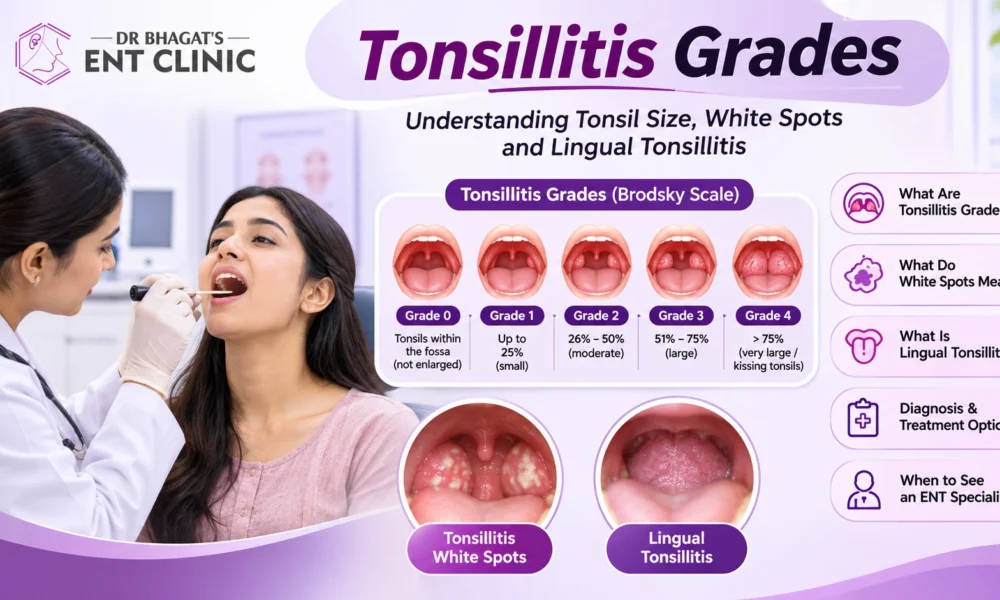
ENT specialists commonly use the Brodsky grading scale to describe the size of these tonsils. The scale estimates how much of the space between the sides of the throat is occupied by the tonsils. It ranges from Grade 0 to Grade 4.
When discussing tonsillitis grades, it is important to understand that the scale measures tonsil enlargement rather than the severity of an infection. A person may naturally have large tonsils without having an active infection. Similarly, someone with an acute throat infection may experience significant pain and fever even when the tonsils are not very large.
The grading system provides a consistent way for clinicians to document tonsil size. However, symptoms, medical history and examination findings are equally important when deciding whether treatment is needed.
Tonsillitis Grades and White Spots: What Do They Mean?
The Brodsky scale uses the approximate proportion of the oropharyngeal width occupied by the tonsils. The following table explains the commonly used categories.
| Grade | Approximate space occupied | General description |
| Grade 0 | Within the tonsillar fossa | Tonsils are not visibly enlarged |
| Grade 1 | Up to 25% | Small enlargement |
| Grade 2 | 26%–50% | Moderate enlargement |
| Grade 3 | 51%–75% | Large enlargement |
| Grade 4 | More than 75% | Very large tonsils, sometimes touching near the midline |
These tonsillitis grades describe the visible size of the palatine tonsils. Grade 4 tonsils are sometimes called kissing tonsils because they may meet near the middle of the throat.
A higher grade may be clinically relevant when enlarged tonsils contribute to snoring, mouth breathing, swallowing difficulties or disturbed sleep. However, the grade alone does not establish the cause of these symptoms or indicate that surgery is required.
An ENT specialist assesses the tonsils along with the patient’s symptoms, sleep history, frequency of infections and overall health before recommending a treatment plan.
Do Higher Tonsillitis Grades Mean a More Serious Infection?
No. Tonsil size and infection severity are separate clinical considerations. A person may have Grade 3 tonsils for a long time without experiencing an active infection. Another person may develop acute tonsillitis with fever, throat pain and white patches despite having relatively small tonsils.
Therefore, tonsillitis grades should not be used as the only measure of how serious an infection is. An ENT specialist or other healthcare professional considers symptoms such as fever, pain, swallowing ability, hydration, breathing and the possibility of complications.
For example, enlarged tonsils may affect sleep even when there is no active infection. On the other hand, acute tonsillitis may cause severe discomfort for a few days without causing significant long-term enlargement.
In children, clinicians may also ask about snoring, pauses in breathing during sleep, restless sleep, daytime tiredness and difficulty eating. These details help establish whether enlarged tonsils are affecting everyday health.
Tonsillitis White Spots: What Do They Mean?
White spots or patches on the tonsils may represent inflammatory material or exudate associated with an infection. They can occur with viral tonsillitis as well as bacterial infections, including group A streptococcal infection. Their appearance alone cannot confirm which germ is responsible.
Other symptoms may include a sore throat, painful swallowing, fever, tender glands in the neck, bad breath and red or swollen tonsils. Some people may also experience headaches, tiredness or pain that seems to travel towards the ears.
A healthcare professional may assess the pattern of symptoms and recommend a rapid test or throat swab when appropriate. These tests can help determine whether a bacterial infection is present and whether antibiotics are suitable.
| Finding or symptom | What it may indicate | Recommended action |
| White patches with throat pain | Viral or bacterial tonsil infection | Arrange a clinical assessment if symptoms are significant |
| Red and swollen tonsils | Inflammation caused by different possible infections | Monitor symptoms and seek advice if they worsen |
| Fever with tender neck glands | May occur with bacterial or viral infections | A clinician can decide whether testing is required |
| Severe one-sided throat pain | Possible complication such as a peritonsillar abscess | Seek urgent medical assessment |
| Difficulty breathing or swallowing saliva | Possible serious throat or airway complication | Seek emergency medical care |
The presence of white spots should be assessed alongside other symptoms rather than interpreted through tonsillitis grades alone. Avoid scraping or squeezing the patches at home. Do not take leftover antibiotics or start an antibiotic course without medical advice. Many cases are viral and do not benefit from antibiotics.
Tonsillitis Grades and Lingual Tonsillitis: Key Differences
The tonsils that are visible when you open your mouth are called palatine tonsils. Lingual tonsils are different. They are collections of lymphoid tissue located at the base of the tongue, farther back in the throat.
Lingual tonsillitis refers to inflammation of this tissue. Because the lingual tonsils are positioned behind the visible tongue, they cannot usually be examined properly by simply looking inside the mouth.
People with lingual tonsillitis may experience a deep or persistent sore throat, pain while swallowing, a sensation of something stuck in the throat or discomfort that may be felt around the ear. The visible palatine tonsils may appear normal even when inflammation is present farther back.
An ENT specialist may recommend flexible transnasal laryngoscopy to examine the base of the tongue and surrounding structures. This examination helps identify inflammation and assess other possible causes of throat discomfort.
The usual Brodsky scale is designed to describe visible palatine tonsil enlargement. It does not directly grade lingual tonsil inflammation. Therefore, tonsillitis grades should not be used to describe the severity of lingual tonsillitis.
How Are Tonsillitis Grades and Lingual Tonsillitis Diagnosed?
Diagnosis begins with a discussion about symptoms, their duration and whether the patient has experienced repeated throat infections. The ENT specialist may ask about fever, swallowing difficulties, sleep-related symptoms, snoring and any previous treatment.
During the examination, the clinician checks the mouth and throat, observes the tonsils and may examine the neck for tender or enlarged lymph nodes. The size of the palatine tonsils can be documented using the Brodsky scale.
If a bacterial infection is suspected, a throat swab or rapid test may be recommended. When symptoms suggest inflammation at the base of the tongue, flexible laryngoscopy may be useful because this area cannot be fully assessed through a routine mouth examination.
The assessment helps the specialist interpret tonsillitis grades in the context of the patient’s symptoms and examination findings. Additional investigations may be recommended if there are persistent, unusual or one-sided symptoms.
Treatment Options: What Determines the Right Approach?
Treatment depends on the cause of the inflammation, the patient’s symptoms and whether complications are present. Viral tonsillitis generally improves with supportive care. Rest, adequate fluids and suitable pain or fever relief may help manage discomfort. A healthcare professional or pharmacist can advise which medicines are appropriate for the individual.
Antibiotics may be prescribed when a bacterial infection is confirmed or strongly suspected according to clinical guidance. They do not treat viral infections and should only be taken as directed by a qualified healthcare professional.
People with repeated infections, persistent symptoms, significant tonsil enlargement or sleep-related breathing problems may need further ENT evaluation. In selected cases, surgery may be considered after reviewing the medical history, frequency of infections and effect on quality of life.
A high grade alone is not a reason for tonsil surgery. Even when tonsillitis grades indicate substantial enlargement, the decision about treatment depends on the complete clinical picture. The specialist discusses the potential benefits and risks before recommending any procedure.
When Should You See an ENT Specialist?
Arrange an ENT consultation if you experience recurring throat infections, persistent throat pain, white patches accompanied by fever or significant discomfort, or enlarged tonsils associated with snoring and swallowing difficulties.
You should also seek medical assessment for persistent one-sided throat symptoms, unexplained changes in the throat or a noticeable neck lump. These symptoms may require further examination rather than repeated self-treatment.
Seek emergency medical care if you have difficulty breathing, cannot swallow fluids or saliva, are drooling because you cannot swallow, experience rapidly worsening throat swelling or have difficulty opening your mouth or speaking. These symptoms may indicate a serious complication and should not wait for a routine appointment.
Do not rely on the visible tonsil size alone. Symptoms involving the base of the tongue or deeper throat structures may not be obvious during a self-examination.
ENT Consultation in Hadapsar, Pune
If you are concerned about recurring throat infections, enlarged tonsils, white patches or discomfort that may involve the base of the tongue, an ENT evaluation can help identify the possible cause.
Dr. Monika Bhagat’s clinic in Hadapsar, Pune, provides ENT consultation for patients experiencing tonsil and throat-related concerns. An ENT specialist can examine the throat, assess tonsil enlargement and explain whether further testing or treatment may be appropriate.
Whether you are concerned about tonsillitis grades, repeated infections or persistent throat discomfort, the right approach depends on your symptoms and individual clinical findings. A timely consultation can help you understand the condition and discuss suitable treatment options.
Contact With Us
For an appointment or clinic-related enquiry, contact the clinic:
Phone: +91-735-091-2925
Email: contact@drmonikabhagat.com
Address: 303, The Cosmopolis, Amanora Park Town, Hadapsar, Pune – 411028
Clinic Hours:
- Monday, Tuesday, Thursday, Friday and Saturday: 11:00 AM–08:00 PM
- Wednesday: Closed
- Sunday: 05:00 PM–06:30 PM (by appointment only)
Call or email the clinic to confirm appointment availability before visiting.
Frequently Asked Questions
1. What are the different tonsillitis grades?
The commonly used Brodsky scale describes palatine tonsil size from Grade 0 to Grade 4. Grade 0 means the tonsils are within the tonsillar fossa, while Grade 4 means they occupy more than 75% of the oropharyngeal width.
2. Are Grade 3 or Grade 4 tonsils dangerous?
Not automatically. Larger tonsils may contribute to snoring, sleep-disordered breathing or swallowing difficulties, but the grade alone does not determine whether they are dangerous or require surgery. Symptoms and examination findings are important.
3. Do white spots always mean bacterial tonsillitis?
No. White patches can occur with viral as well as bacterial infections. A healthcare professional may recommend a throat swab or other assessment depending on the symptoms and examination findings.
4. Can lingual tonsillitis occur after tonsil removal?
Yes. Removal of the visible palatine tonsils does not remove the lingual tonsils at the base of the tongue. Inflammation in this area can still occur and may require an ENT examination with a scope.
5. How is lingual tonsillitis diagnosed?
An ENT specialist may use flexible transnasal laryngoscopy to examine the base of the tongue. This allows the clinician to view tissue that cannot be assessed properly during a routine mouth examination.
6. When is tonsil surgery considered?
Surgery may be considered in selected cases, such as repeated significant infections or enlarged tonsils that cause obstruction or sleep-related breathing problems. The decision depends on clinical assessment rather than tonsil size alone.