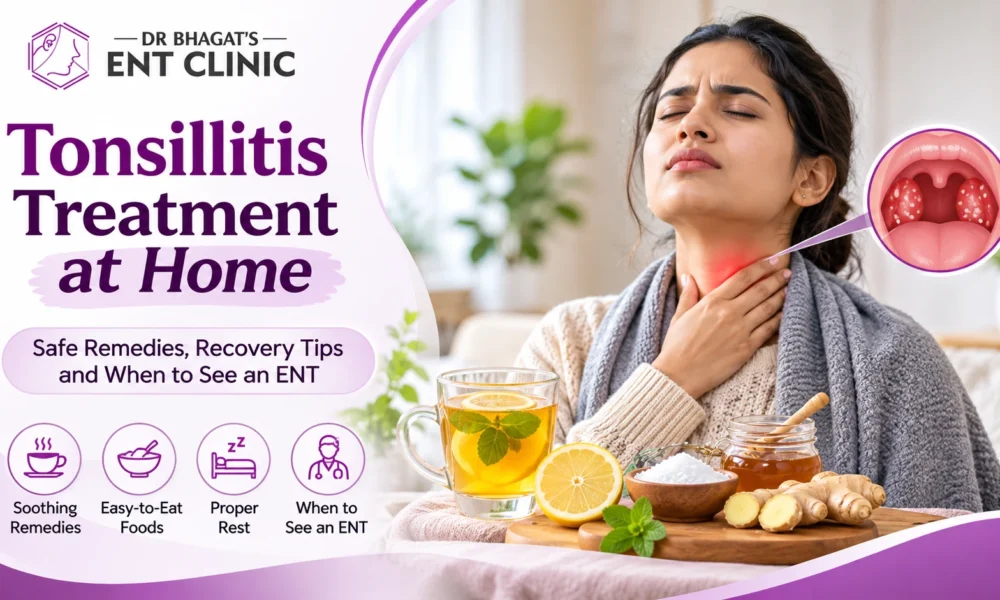
Tonsillitis Treatment at Home: Safe Remedies, Recovery Tips and When to See an ENT
A sore throat can make everyday activities such as eating, drinking and speaking uncomfortable. When the tonsils become inflamed, simple home-care measures may help reduce discomfort while the body recovers. Understanding tonsillitis treatment at home is important because not every throat infection has the same cause or needs the same treatment.
Tonsillitis is inflammation of the tonsils, the two soft tissue pads at the back of the throat. It is commonly caused by viruses and can also result from bacterial infections, including group A Streptococcus. Symptoms may include a sore throat, painful swallowing, fever, swollen tonsils, tender neck glands and sometimes white patches.
Home care can ease symptoms, but it cannot confirm whether an infection is viral or bacterial. This guide explains which measures may help, what to avoid and when to seek professional assessment. It also explains how to approach tonsillitis treatment at home safely.
What Can Home Treatment Do?
Home care mainly focuses on relieving pain, maintaining hydration and supporting recovery. Many uncomplicated cases, particularly viral infections, improve on their own over several days. However, home remedies cannot identify the cause or replace treatment when a bacterial infection needs medical attention.
A sensible tonsillitis treatment at home routine uses simple measures that make swallowing more comfortable. Monitor your symptoms as well: worsening pain, persistent fever or difficulty drinking are reasons to contact a healthcare professional. These checks are an essential part of tonsillitis treatment at home.
1. Drink Plenty of Fluids
Staying hydrated is one of the simplest ways to manage throat discomfort. Fever and reduced fluid intake can increase the risk of dehydration, especially when swallowing is painful.
Take frequent small sips of water throughout the day. Some people find cool water soothing, while others prefer warm drinks or clear soups. Choose whichever temperature feels comfortable. This simple choice supports tonsillitis treatment at home. Avoid acidic drinks if they cause a burning sensation. These simple hydration steps can support tonsillitis treatment at home.
For tonsillitis treatment at home, drinking enough fluids matters more than choosing a special drink. If you cannot swallow liquids or show signs of dehydration, seek medical attention.
2. Try a Warm Salt-Water Gargle
A warm salt-water gargle may temporarily soothe throat discomfort in adults and older children who can gargle and spit safely.
Mix about half a teaspoon of salt into a glass of warm water. Gargle with the solution and spit it out; do not swallow it. Young children who cannot gargle safely should not use this method. Gargling is only one optional measure in tonsillitis treatment at home.
Salt-water gargling is a supportive measure, not a cure for the infection. It may be included in tonsillitis treatment at home to ease irritation, but it should not delay medical assessment when symptoms are severe.
3. Choose Soft, Comfortable Foods
Painful swallowing can make regular meals difficult. Instead of forcing yourself to eat hard or dry foods, choose softer options that are easier on the throat.
Porridge, soft rice, mashed vegetables, yoghurt and soups may be more comfortable. Smaller meals throughout the day can also help when a full meal feels difficult. This makes tonsillitis treatment at home easier to manage when swallowing is uncomfortable.
No particular food can cure tonsillitis. This part of tonsillitis treatment at home is about maintaining nutrition without increasing throat irritation. Avoid foods that feel too spicy, rough or acidic if they worsen your discomfort.
4. Rest and Avoid Throat Irritants
Your body needs adequate rest while recovering from an infection. Reduce strenuous activities if you have a fever or feel unusually tired. If speaking increases discomfort, give your voice some rest. Rest is a practical part of tonsillitis treatment at home while symptoms settle.
Smoke, second-hand smoke, dust and other irritants may aggravate an already sore throat. Avoid smoking and exposure to cigarette smoke while recovering.
Wash your hands regularly, cover your mouth when coughing or sneezing, and avoid close contact with others while unwell. These precautions can reduce the spread of respiratory infections and complement tonsillitis treatment at home.
5. Use Pain Relief Responsibly
Pain and fever can sometimes be managed with medicines such as paracetamol or ibuprofen. The appropriate medicine depends on age, medical history, allergies, pregnancy status and other medicines being taken.
Follow the product instructions or ask a qualified doctor or pharmacist before taking medication. Do not combine multiple cold and pain-relief products without checking their ingredients, as some may contain the same active medicine.
Aspirin should not be given to children under 16. Medicine safety is especially important when planning tonsillitis treatment at home for children. Avoid taking leftover antibiotics or medicines prescribed to someone else. Safe tonsillitis treatment at home means using medicines responsibly rather than self-prescribing.
Quick Guide to Home-Care Measures
| Home-care measure | How it may help | Important precaution |
| Drinking water and fluids | Helps maintain hydration and keeps the throat moist | Seek advice if you cannot drink enough |
| Warm salt-water gargle | May temporarily soothe throat discomfort | Only for people who can gargle and spit safely |
| Soft foods | Makes eating more comfortable | Avoid foods that worsen pain |
| Adequate rest | Helps manage fatigue during recovery | Avoid strenuous activity if feverish |
| Suitable pain relief | May reduce pain and fever | Check dosage instructions and precautions |
Home Remedies You Should Avoid
Not every remedy recommended online is safe or effective. Strong herbal mixtures, concentrated essential oils, extremely hot drinks and undiluted substances may irritate the throat or cause harm. Natural products can also interact with medicines.
Do not scrape white patches from your tonsils, try to drain swollen areas or apply household substances directly to the throat. These actions can cause injury and will not reliably treat the underlying infection. Safe tonsillitis treatment at home should avoid methods that may damage the throat.
Avoid unnecessary antibiotics. Antibiotics do not work against viruses. Taking them without a proper medical assessment can cause side effects and contribute to antibiotic resistance. If you are considering tonsillitis treatment at home, do not use antibiotics unless they have been prescribed for your condition.
When Is Home Care Not Enough?
Home care may be suitable for mild symptoms, but some situations require medical assessment. Consult a doctor if your sore throat does not improve within about a week, keeps returning, or is accompanied by persistent fever, worsening pain or difficulty eating and drinking.
An ENT specialist can examine your throat and tonsils and decide whether further investigation is necessary. Depending on your symptoms, this may include a rapid strep test or throat swab to check for a bacterial infection. This helps determine whether tonsillitis treatment at home alone is appropriate or medical treatment is needed.
Seek urgent medical attention if you experience:
- Difficulty breathing.
- Inability to swallow food, fluids or saliva.
- Drooling because you cannot swallow saliva.
- Significant swelling inside the mouth or throat.
- Difficulty opening your mouth.
- A severe sore throat that is rapidly getting worse.
These symptoms can indicate a serious problem, including an abscess around the tonsil. At this stage, tonsillitis treatment at home is not a safe substitute for urgent assessment. Do not continue relying on tonsillitis treatment at home when urgent warning signs are present.
Viral vs Bacterial Tonsillitis: Why the Difference Matters
Viral and bacterial tonsillitis can cause similar symptoms, but their treatment may differ. Viruses are a common cause of tonsillitis, while bacterial infections such as strep throat may require antibiotics.
| Comparison | Viral tonsillitis | Bacterial tonsillitis |
| Possible symptoms | Sore throat, cough, runny nose or hoarseness | Sudden sore throat, fever and painful swallowing |
| Cause | Viral infection | Bacterial infection, including group A Streptococcus |
| Testing | Often unnecessary when symptoms clearly suggest a viral infection | A clinician may recommend a rapid strep test or throat culture |
| Antibiotics | Do not treat viral infections | May be prescribed when a bacterial infection is confirmed or clinically indicated |
| Supportive care | Fluids, rest and suitable pain relief may help | Supportive care may ease discomfort alongside prescribed treatment |
Symptoms alone cannot always confirm whether an infection is viral or bacterial. This is why tonsillitis treatment at home should not involve guessing the cause or starting antibiotics independently. A healthcare professional can assess your symptoms and decide whether testing is needed.
If antibiotics are prescribed, take them exactly as directed. Do not share medication or change the prescribed course without speaking to the prescriber. Home care can support comfort, but it does not replace appropriate treatment for a confirmed bacterial infection.
How Long Does Tonsillitis Take to Recover?
Many uncomplicated cases start improving within a few days, although symptoms can sometimes last longer. Recovery depends on the cause of the infection, general health and whether complications develop. The expected recovery period can influence how long tonsillitis treatment at home remains suitable.
During recovery, continue drinking enough fluids, eating foods that are comfortable to swallow and getting adequate rest. If symptoms become worse instead of improving, or continue beyond a week, arrange a medical assessment rather than extending home care indefinitely.
Can Tonsillitis Keep Coming Back?
Repeated episodes of tonsillitis should not be ignored, particularly when they interfere with eating, sleeping, attending school or working. Frequent throat infections may require a detailed ENT assessment.
An ENT specialist can review the frequency and severity of previous episodes, examination findings, test results and earlier treatments. Depending on the individual situation, further treatment options may be discussed.
Repeatedly following the same tonsillitis treatment at home routine without understanding why symptoms keep returning may delay appropriate care. A professional evaluation can help identify the underlying problem and guide the next steps. It can also clarify whether repeated tonsillitis treatment at home is addressing symptoms without resolving the cause.
Frequently Asked Questions
1. What is the best tonsillitis treatment at home?
There is no single home remedy that cures every case. Drinking enough fluids, resting, eating soft foods, using suitable pain relief and trying a warm salt-water gargle when safe may help relieve discomfort. The right approach depends on the cause and severity of the infection. For mild symptoms, tonsillitis treatment at home may provide supportive relief while recovery takes place.
2. Can salt-water gargling cure tonsillitis?
No. Salt-water gargling may temporarily soothe throat discomfort, but it does not cure the underlying infection. It should be used only by people who can gargle and spit safely. It may be a small part of tonsillitis treatment at home, rather than a stand-alone cure.
3. Do I need antibiotics for tonsillitis?
Not always. Many cases are caused by viruses, which do not respond to antibiotics. A doctor may recommend a test and prescribe antibiotics when a bacterial infection such as strep throat is confirmed or treatment is otherwise indicated. In those cases, tonsillitis treatment at home should complement, not replace, the clinician’s advice.
4. Can I eat normally during tonsillitis?
Choose foods that are comfortable to swallow. Soft foods, soups and fluids may be easier to manage than hard, dry, spicy or acidic foods. If you cannot swallow fluids or saliva, seek urgent medical care. Do not continue tonsillitis treatment at home when swallowing becomes unsafe.
5. When should I consult an ENT specialist?
Consult an ENT specialist if symptoms persist, keep returning or become worse, or if you have ongoing fever and difficulty eating or drinking. Breathing difficulty, inability to swallow, drooling or significant throat swelling require urgent medical attention. These are not situations for tonsillitis treatment at home.
Get Professional Guidance for Tonsil and Throat Problems
Home care can help make mild tonsillitis symptoms more manageable, but it is important to recognise when professional evaluation is necessary. The correct diagnosis helps determine whether symptoms are caused by a viral infection, bacterial infection or another throat condition. This distinction is central to deciding whether tonsillitis treatment at home is enough.
If you are experiencing persistent, severe or recurring throat symptoms, consult an ENT specialist for an appropriate evaluation and treatment plan. Do not rely on tonsillitis treatment at home for symptoms that are worsening or repeatedly returning.
Contact With Us
For an ENT consultation, contact Dr. Monika Bhagat’s ENT Clinic in Hadapsar, Pune.
Phone: +91-735-091-2925
Email: contact@drmonikabhagat.com
Address: 303, The Cosmopolis, Amanora Park Town, Hadapsar, Pune – 411028
Clinic Hours:
- Monday, Tuesday, Thursday, Friday and Saturday: 11:00 AM – 8:00 PM
- Wednesday: Closed
- Sunday: 5:00 PM – 6:30 PM (by appointments only)
For urgent breathing or swallowing difficulties, seek emergency medical care rather than waiting for a clinic appointment.