Sinus Infection Medicine: What You Need to Know Before Taking It
A sinus infection can cause nasal congestion, thick mucus, facial pressure, headache, reduced sense of smell and difficulty breathing through the nose. When these symptoms continue, many people search for the right sinus infection medicine for quick relief. However, sinusitis can have different causes, including viral infections, bacterial infections, allergies and inflammation. Because the cause can affect the treatment, there is no single sinus infection medicine that is suitable for every patient.
Some sinus infections improve with supportive care, while others may require prescription treatment after an ENT evaluation. Dr. Monika Bhagat provides specialized nose and sinus care for conditions including sinusitis, allergies, nasal blockage, sneezing and related breathing problems in Hadapsar, Pune.
What Is a Sinus Infection?
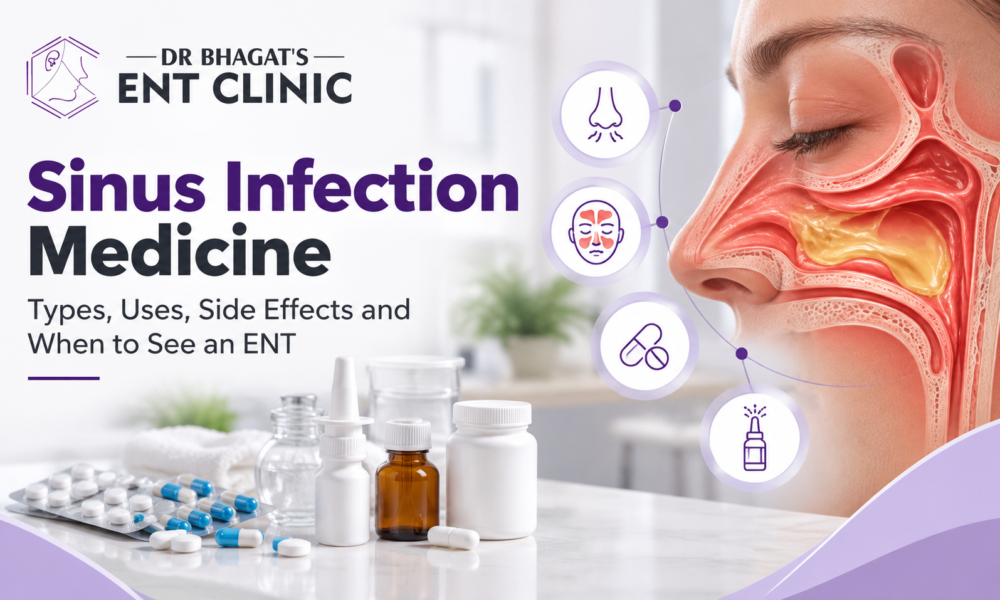
Sinusitis is inflammation or swelling of the tissues lining the sinuses. The sinuses are air-filled spaces around the nose, cheeks, forehead and eyes. When their normal drainage becomes blocked, mucus can accumulate and create pressure, congestion and discomfort.
A sinus infection may develop after a viral cold, while allergies, nasal inflammation, nasal polyps or structural problems can contribute to recurring symptoms. This is why choosing a sinus infection medicine based only on symptoms may not address the underlying problem.
Common symptoms include:
- Blocked or stuffy nose
- Thick nasal mucus
- Postnasal drip
- Facial pressure or pain
- Headache
- Reduced sense of smell
- Cough
- Bad breath
- Ear pressure
- Fever in some cases
If symptoms are persistent or repeatedly return, an ENT assessment can help identify the possible cause and determine whether a sinus infection medicine is appropriate.
What Types of Sinus Infection Medicine Are Used?
The appropriate sinus infection medicine depends on whether the problem is related to infection, inflammation, allergies, congestion or another underlying condition. Treatment should therefore be individualized after considering symptoms, duration and clinical findings.
1. Antibiotics for Bacterial Sinusitis
Antibiotics are sometimes prescribed when a healthcare professional determines that bacterial sinusitis is likely. They do not treat viral infections, so they should not be taken simply because a person has nasal congestion or facial pressure.
Depending on the individual situation, doctors may consider antibiotics such as amoxicillin with clavulanate or other suitable medicines. The choice depends on factors such as the suspected infection, allergies, previous treatment, medical history and local prescribing considerations.
Taking antibiotics without medical advice can cause side effects and contributes to antibiotic resistance. If an antibiotic is prescribed as a sinus infection medicine, it should be taken exactly as directed by the healthcare professional.
2. Nasal Corticosteroid Sprays
Nasal corticosteroid sprays may be recommended when inflammation contributes to sinus symptoms, particularly when allergies or chronic nasal inflammation are involved.
These sprays work locally inside the nose and can help reduce inflammation and congestion. They are different from oral steroid medicines and should be used according to medical instructions.
If symptoms continue despite treatment, an can assess whether another cause is contributing to the problem.
3. Decongestants
Decongestants can temporarily reduce nasal congestion and make breathing through the nose easier. They may be available in oral or nasal forms.
However, some decongestant nasal sprays should only be used for a short period because prolonged use can lead to rebound congestion. This means the nose may become more blocked after the medicine is stopped.
Therefore, choosing a sinus infection medicine for congestion should take into account the type of product, how long it should be used and the patient’s medical history.
4. Antihistamines
When allergies contribute to nasal symptoms, an antihistamine may be recommended. Antihistamines can help control symptoms such as sneezing, itching and runny nose.
They may be available as tablets, liquids or nasal preparations. Some antihistamines can cause drowsiness or dry mouth, while newer options may have less sedating effects.
An antihistamine is not automatically the right sinus infection medicine for every sinus problem. It is more useful when an allergic component is contributing to the symptoms.
5. Saline Nasal Rinse
A saline nasal rinse is a non-medicated option that can help wash away mucus, allergens and irritants from the nasal passages. It may provide relief from congestion and help keep the nasal passages clearer.
If you use a nasal irrigation device, it is important to follow proper hygiene and use appropriately prepared water as recommended by a healthcare professional.
Saline rinsing may be used alongside other treatment when appropriate, but persistent symptoms may require further evaluation rather than repeated home treatment alone.
6. Pain and Fever Relief
Sinusitis can sometimes cause facial discomfort, headache or fever. Depending on a person’s health history, appropriate over-the-counter pain or fever medicines may provide temporary symptom relief.
It is important to follow the recommended dosage and check whether the medicine is suitable for you, particularly if you have other medical conditions or take other medicines.
What Are the Side Effects of Sinus Infection Medicine?
Like all medicines, sinus infection medicine can have potential side effects. The type and severity depend on the medicine and the individual.
Antibiotics may cause nausea, diarrhea, stomach discomfort or skin reactions. Some people may experience allergic reactions, which require prompt medical attention.
Decongestants can sometimes cause nervousness, palpitations, difficulty sleeping or other effects. Nasal decongestants can also cause rebound congestion if used for too long.
Antihistamines may cause drowsiness, dry mouth or constipation, depending on the specific medicine.
Nasal corticosteroids can cause local effects such as nasal irritation or nosebleeds in some people. Oral corticosteroids have a different side-effect profile and should only be used under appropriate medical supervision.
Because the right sinus infection medicine varies from person to person, it is better to discuss persistent symptoms with an ENT specialist rather than repeatedly changing medicines yourself.
Do You Need Antibiotics for Every Sinus Infection?
No. Antibiotics are not required for every sinus infection.
Many sinus infections are associated with viral infections and may improve without antibiotics. Using antibiotics when they are not needed does not speed recovery from a viral infection and can expose you to unnecessary side effects.
Symptoms that persist, worsen after initial improvement or repeatedly return may require medical assessment. An ENT specialist can evaluate the symptoms and decide whether further testing or prescription treatment is necessary.
When Should You See an ENT for Sinusitis?
Occasional nasal congestion may improve with basic care. However, you should consider an ENT consultation if sinus symptoms are persistent, recurrent or interfering with your daily activities.
An ENT evaluation may be appropriate when you experience:
- Repeated sinus infections
- Persistent nasal blockage
- Facial pressure or pain
- Reduced sense of smell
- Difficulty breathing through the nose
- Symptoms that keep returning after treatment
- Long-lasting postnasal drainage
- Possible allergies
- Suspected nasal polyps or structural nasal problems
Dr. Monika Bhagat’s clinic provides specialized sinus and allergy care and focuses on advanced diagnosis and personalized treatment plans for patients with sinusitis, allergies, nasal blockage and related concerns.
Can Sinusitis Require Surgery?
Not every patient with sinusitis requires surgery. Medical treatment is often considered first, depending on the cause and severity.
When symptoms are caused by structural problems, certain chronic sinus conditions or other issues that do not respond adequately to appropriate medical management, an ENT specialist may discuss procedural or surgical options.
Dr. Monika Bhagat’s practice lists sinus procedures among its ENT services and provides personalized medical and surgical care based on the patient’s condition.
The decision to consider surgery should follow an appropriate evaluation. Your ENT specialist can explain the reason for the procedure, available alternatives, expected benefits, potential risks and recovery requirements.
Why Choose Dr. Monika Bhagat for Sinus Treatment in Pune?
Dr. Monika Bhagat provides ENT care for children and adults in Hadapsar, Pune, including specialized nose and sinus care. The clinic focuses on detailed ENT evaluation, personalized treatment planning and modern medical and procedural options.
If you are repeatedly searching online for a sinus infection medicine because your symptoms keep returning, identifying the underlying cause may be more useful than continuously changing medicines.
Allergies, chronic inflammation, infection and structural nasal problems can produce similar symptoms but may require different approaches. A professional ENT evaluation can help determine which treatment is appropriate for your condition.
Book a Sinus Consultation in Pune
If you are experiencing recurring sinus infections, nasal blockage, facial pressure, postnasal drainage or difficulty breathing through your nose, consult an ENT specialist before continuing self-medication.
Dr. Monika Bhagat’s ENT clinic is located at 303B, The Cosmopolis, Opposite of Seasons Mall, Hadapsar, Pune. The clinic provides nose and sinus care along with comprehensive ENT services.
For appointments and enquiries:
Call: +91 735 091 2925
A proper diagnosis can help determine whether you need a sinus infection medicine, supportive care, allergy treatment, further investigation or another form of ENT treatment.
Frequently Asked Questions About Sinus Infection Medicine
1. What is the best sinus infection medicine?
There is no single sinus infection medicine that is best for everyone. Treatment depends on whether symptoms are caused by a virus, bacteria, allergies, inflammation or another underlying problem. An ENT specialist can recommend treatment based on the individual diagnosis.
2. Do I need antibiotics for a sinus infection?
Not necessarily. Many sinus infections do not require antibiotics. Antibiotics are generally considered when a bacterial infection is suspected or diagnosed and a healthcare professional determines that they are appropriate.
3. Can I take sinus infection medicine without seeing a doctor?
Some over-the-counter treatments may provide temporary symptom relief, but persistent or recurring sinus symptoms should be evaluated by a healthcare professional. Avoid taking prescription antibiotics or steroids without medical guidance.
4. Can allergies cause sinus problems?
Yes. Allergies can cause nasal inflammation, congestion, sneezing and increased mucus production. These symptoms can contribute to sinus problems. Treating the underlying allergy may be an important part of managing recurring symptoms.
5. How long does a sinus infection usually last?
The duration varies depending on the cause. Many acute sinus infections improve within days to a few weeks, while chronic sinusitis can last much longer. Persistent or recurrent symptoms should be evaluated by an ENT specialist.
6. When should I see a sinus specialist in Pune?
Consider consulting a sinus specialist when symptoms are persistent, repeatedly return, affect sleep or daily activities, or do not improve with appropriate basic treatment. An ENT evaluation can help identify the underlying cause and guide further management.
7. Can sinusitis be treated without antibiotics?
Yes. Depending on the cause, treatment may involve saline rinsing, appropriate nasal sprays, allergy management, symptom relief and observation. Antibiotics are not useful for viral infections.
8. Where is Dr. Monika Bhagat’s ENT clinic in Pune?
Dr. Monika Bhagat’s ENT clinic is located at 303B, The Cosmopolis, Opposite of Seasons Mall, Hadapsar, Pune. Patients can call +91 735 091 2925 to enquire about an appointment.